Choice Digital Launches the Choice Suite, Putting Payout Choice in Recipients' Hands

Learn more
Blog · 

Five Decisions That Determine Whether A Reward Feels Valuable

By: Theresa McEndree, Chief Growth Officer at Choice Digital
Five Decisions That Determine Whether A Reward Feels Valuable

What makes an incentive reward feel valuable to the recipient?

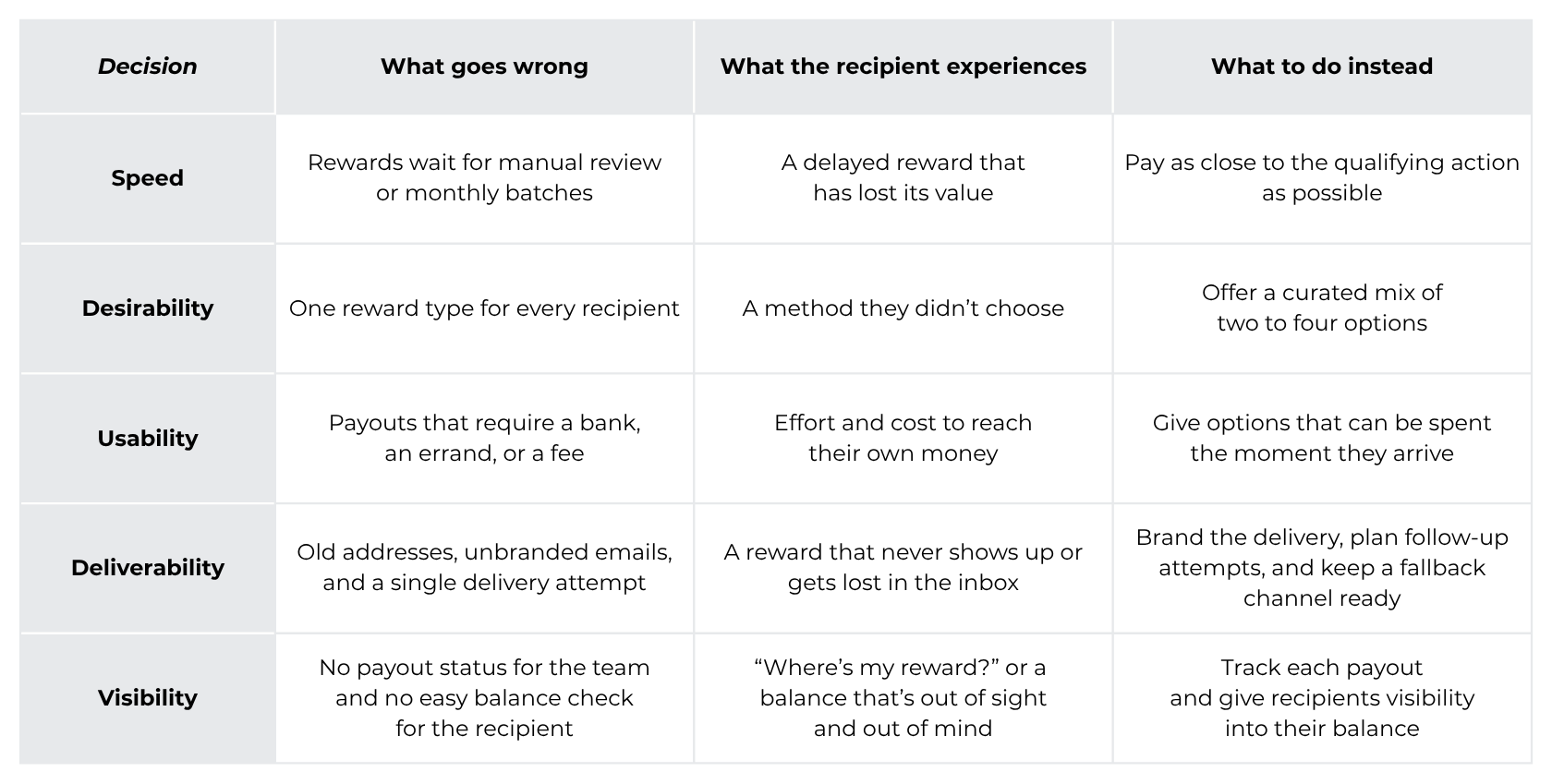
A reward feels valuable when it creates a clear connection between the behavior and the reward. The dollar amount earns their attention, but there are five decisions that shape the experience that stays with the recipient long after the reward is redeemed: speed, desirability, usability, deliverability, and visibility.

According to the State of Consumer Payout Preferences report, 61% of recipients received an incentive or reward payout in the past year, making it crucial to get it right.


How do you increase perceived reward value?

You increase perceived value through delivery decisions, such as:

  1. Speed: How long the recipient waits between earning the reward and getting it. The shorter the gap, the more clearly it connects to the action that earned it.

  2. Desirability: Whether the reward takes a form the recipient would have picked. A reward that fits their plans gets used, and one that doesn’t tends to get set aside.

  3. Usability: How much effort it takes to turn the reward into something spendable. Every extra step, fee, or account requirement takes something away from the value the brand paid for.

  4. Deliverability: Whether the reward reaches the intended person at all. Outdated contact details and unfamiliar senders can stop a reward before the recipient ever sees it.

  5. Visibility: Whether the program team can track each payout from issue to redemption, and whether the recipient can see what they have left to spend. Tracking lets the team spot problems early, and a visible balance keeps the reward on the recipient’s radar.

Each one is easier to get right before launch than to repair afterward.


Speed: How fast should an incentive reward arrive?

The faster, the better. A reward should arrive as close to the qualifying action as the program can manage. Speed matters to recipients in measurable ways:

  • 72% rate speed of delivery as very or extremely important

  • 58% said today’s economy makes receiving money quickly more important

  • 32% said they would pay a fee, averaging $10, to get their money instantly rather than wait two weeks

A customer who submits a receipt or reaches a loyalty tier is most engaged right after that step. A reward that shows up within days confirms the brand held up its end, while one that takes a month to arrive has lost most of its momentum.

A reward is desirable when the recipient would have picked it themselves, and the most dependable way to get there is to let them choose.

The appetite for choice is close to universal. In our research, 94% of recipients said choice of payout method is important, and 79% rated it very or extremely important. Yet 38% said their most recent payout came in a method they would not have chosen.

The single-option default is where many promotions lose ground. A gift card to one retailer works well for recipients who shop there and poorly for everyone else. A Bankrate survey found that 43% of U.S. adults hold at least one unused gift card, voucher, or store credit, with an average value of $244. Among the reasons people lose money on gift cards, 24% received one for a store that wasn’t convenient and 23% received one for a store they didn’t like.

Redemption behavior on the Choice Digital platform shows how quickly preference moves once recipients have real options. Across thousands of programs analyzed in our State of Consumer Payout Preferences report, gift cards took 67% of payouts under $50 when offered alongside digital and physical prepaid cards. When PayPal and Venmo were added to that mix, the gift card share fell to 36% while the wallets took 45%.

Choice works best as a curated set rather than an open catalog. Two to four options, picked for the reward amount and the audience, give recipients a real decision without asking them to browse.


Usability: Can the recipient use the reward the moment it arrives?

A usable reward converts into something spendable in one or two steps, with no fees, bank trips, or new accounts to create. 

And the demand for usability is real: 70% of recipients rate instant usability of funds as very or extremely important, and 88% rated a no-fee experience the same way. When asked what hurts trust in a payout, 42% named friction in accessing funds and 70% said unexpected fees.

Paper checks fail this test most clearly. They need a bank deposit or a trip to a check-cashing counter, and 28% of respondents said they had paid a fee in the past year just to access money from a check.

Usability also determines who can benefit at all, since one in seven recipients is underbanked. A reward that requires a bank account or a trip to a check-cashing counter leaves these customers out.

The most usable rewards are ready the moment they arrive. A virtual prepaid card that can be added to Apple Pay or Google Pay right away, or a transfer to a wallet the recipient already uses, gives them nothing to figure out.


Deliverability: Does the reward actually reach the recipient?

Deliverability is whether the reward reaches the person who earned it, in a form and channel they will recognize and act on. Strong programs are built to get the right funds to the right people.

Many reward failures happen here, out of sight of program reports. Mailed rewards go to old addresses and come back for reissue. Some checks are never cashed, which leads to unclaimed property filings under rules that vary by state. Each of these adds delay, and the work lands on your team.

Digital delivery has its own considerations. Most of the time, a single email gets lost in a crowded inbox, so several attempts to engage give the recipient more than one chance to act. 

Three practices improve deliverability:

  • Confirm contact details at enrollment: Verifying an email or phone number at sign-up costs less than tracking someone down later.

  • Brand the delivery: The reward should arrive under the program’s name, so the recipient connects it to the promotion they joined.

  • Name the reason: A short line such as “Your $50 Spring Reward Program is ready to claim” tells the recipient why they’re being paid and makes the message easier to trust.

  • Plan more than one attempt: One message rarely does the job. If the first few attempts go unanswered, a fallback channel gives the reward another route to the recipient.


Visibility: Can everyone see where the reward stands?

Visibility means both the program team and the recipient can see where a reward stands. The team can track each payout from issue to redemption, and the recipient can see what they have left to spend.

On the program side, the lack of tracking shows up fast. Without it, a team can’t tell whether a reward was claimed, ignored, or never arrived. The first sign of trouble is usually a frustrated customer asking where their money is. A mailed check has no status anyone can look up, so each question turns into a support ticket and a manual investigation, and reconciliation happens weeks later against a bank statement.

Tracking turns those unknowns into next steps. A team that can see an unclaimed reward can make another attempt to reach the recipient or switch to a fallback channel, and a team that can see a failed delivery can correct the details and resend.

On the recipient side, visibility keeps the reward top of mind. Forgetting is natural, and when recipients can see their remaining balance and recent transactions, they know what they have left to spend. Recipients want that loop closed too: 53% would like an email notification when money moves, and 42% prefer a text.


What makes recipients redeem an incentive?

Recipients redeem when nothing gets in the way. Each of the five decisions removes a specific reason to let a reward sit unclaimed.

Unredeemed rewards can look like savings on a budget line. In practice, they are rewards the brand paid for that changed no behavior and earned no goodwill.


How do you build all five decisions into a promotion?

Most promotions already have the offer, eligibility rules, and approval workflow in place. What’s left is the payout, and it doesn’t require rebuilding existing systems.

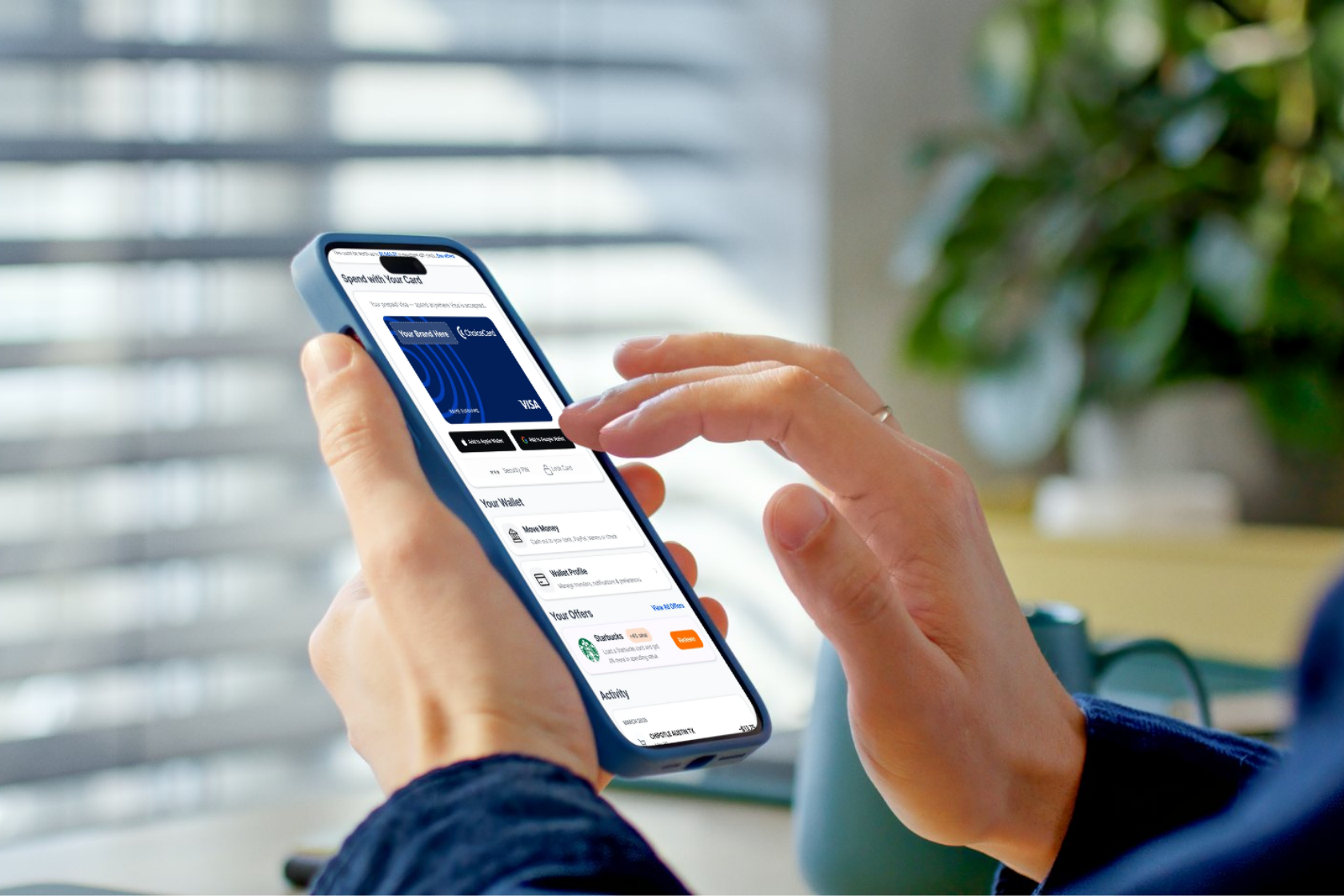
Start with a branded prepaid card. A prepaid card covers desirability and usability at once, because the recipient decides what to spend it on. ChoiceCard can be issued as a physical or virtual card, works anywhere Visa is accepted, and is ready for Apple Pay and Google Pay when it arrives. Because it carries the program’s brand, the promotion shows up again each time the card is used.

Add a payout mix. ChoiceLink delivers one branded link where the recipient picks from the options the program selects, such as a prepaid card, PayPal, Venmo, a gift card, ACH, or a check. 

Connect it to the systems that already approve rewards. An API or file-based integration turns an approved claim into a funded, branded payout. That shortens the gap between qualifying and getting paid, and it keeps a record of who was paid, how much, when, and by which method.


Make every reward feel like a reward

Most promotions can earn more from their reward budget with rewards that arrive soon, in a form the recipient picked, ready to spend, from a recognizable sender, and visible to both the team and the recipient. According to our data, 72% of recipients are more likely to choose a company that offers their preferred payout method. The reward is where the promotion either keeps that promise or breaks it.

Want to see how your reward experience measures up against all five decisions? Book a strategy call with our team.

More to read