Mastering a Major Driver of Customer Satisfaction and Utility Perception
88% of consumers would be very satisfied with their utility if they had their choice of payout or disbursement. However, this critical piece of the customer experience is often overlooked. This report dives into consumer preferences and best practices from Utility leaders, to provide actionable insights to improve CSAT and the utility payment experience.
The flow of funds—and not just energy— between utility companies and their consumers is significant. Whether it’s a deposit return, Net Energy Metering payment, Demand Response incentive, or Energy Efficiency rebate—billions of dollars flow from utilities to consumers annually. And yet, many utilities are slow to modernize their payout and disbursement strategy —leading to consumer dissatisfaction and burden, and inefficient operations and cost structure.
Payments can no longer be viewed as mere point-to-point transactions. They are personal interactions that drive utility program engagement and customer satisfaction when done right—or harm them when done wrong. This report is based on insights from consumer surveys, interviews with utility leaders, and third-party data that map the current landscape of U.S. utility payments and disbursements. We identify critical factors of consumer preference and satisfaction, paired with best practices from industry experts.
Five Key Themes
Our research has identified five key themes that can guide utilities in optimizing payment systems for maximum benefit:
1. Payments Are Personal
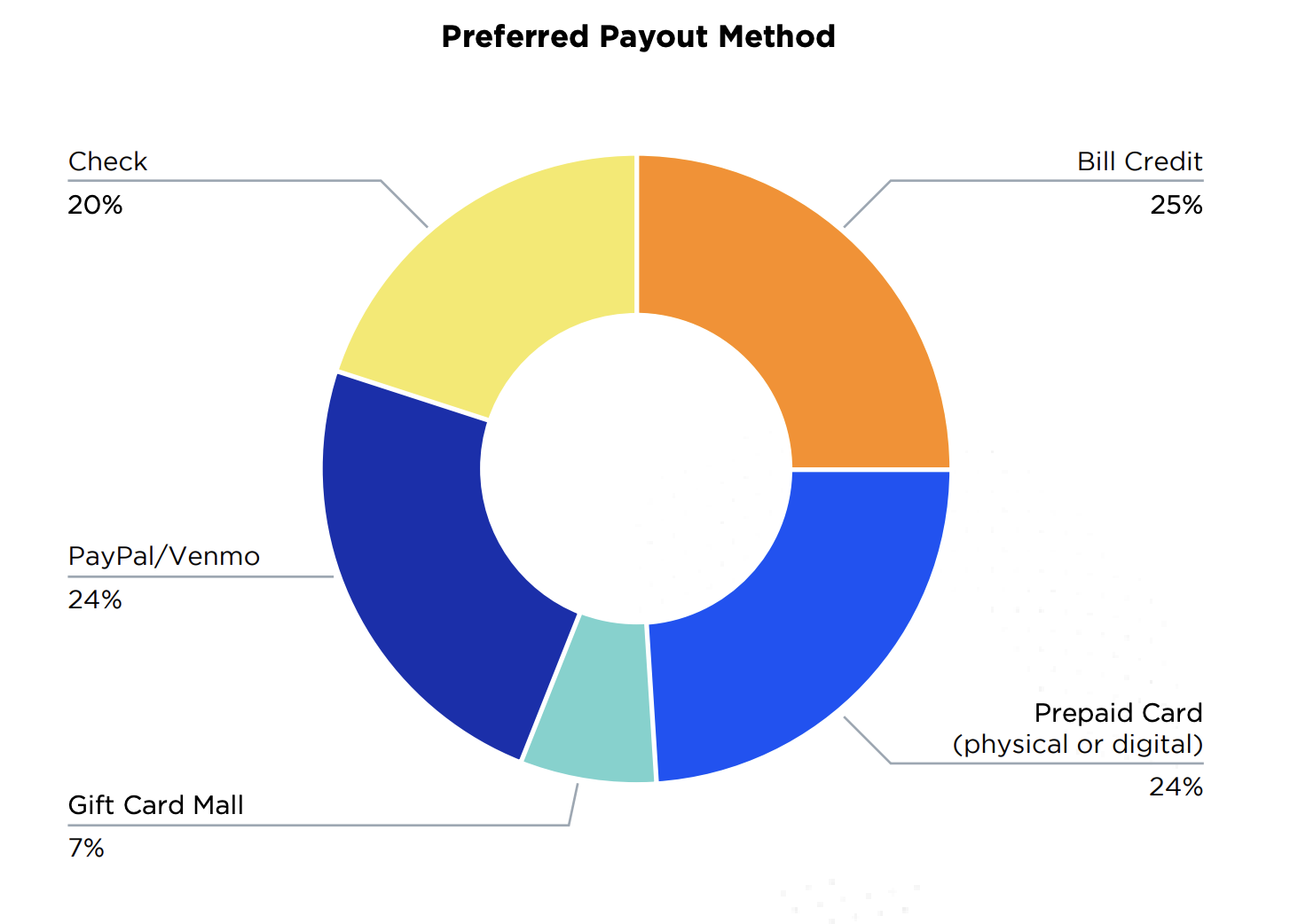
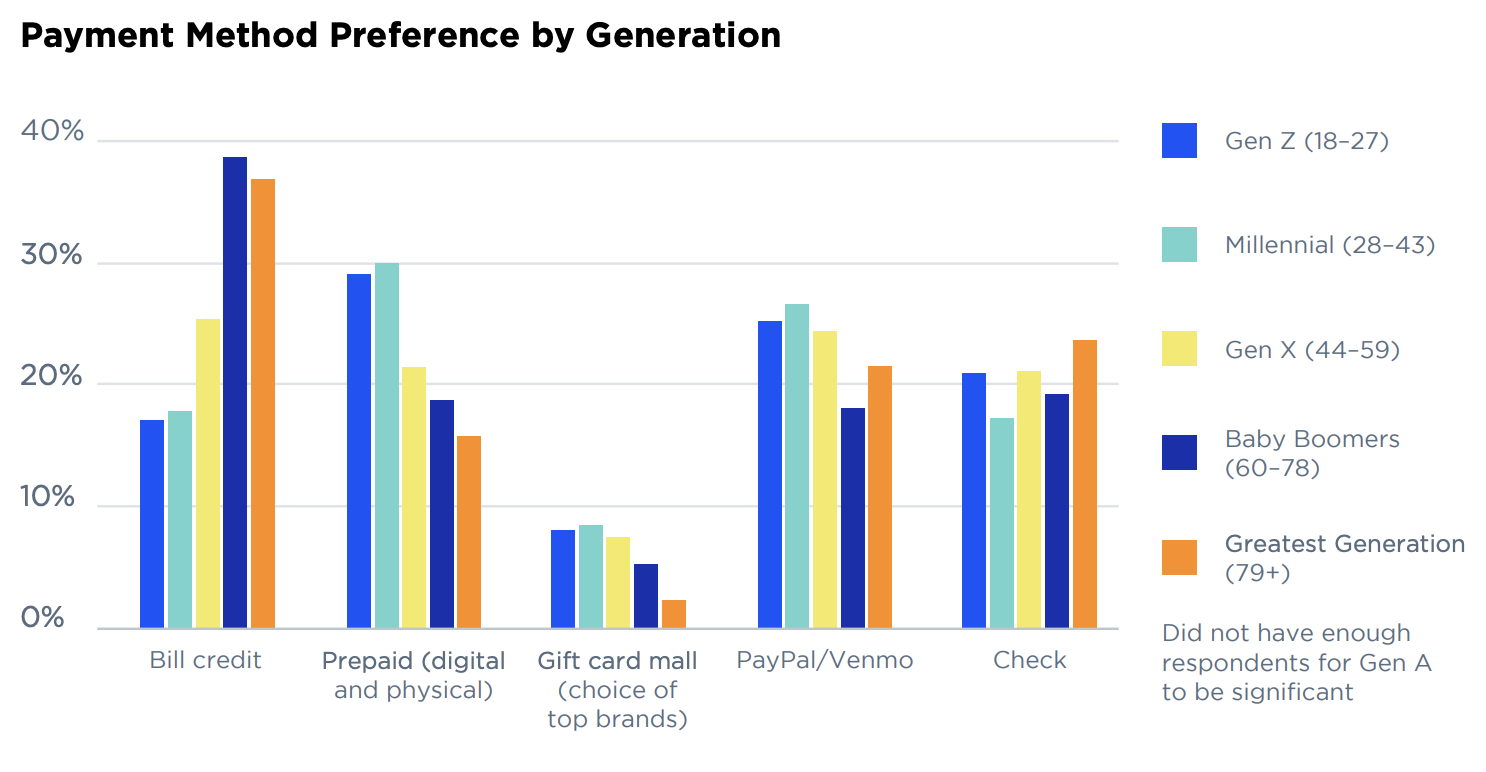
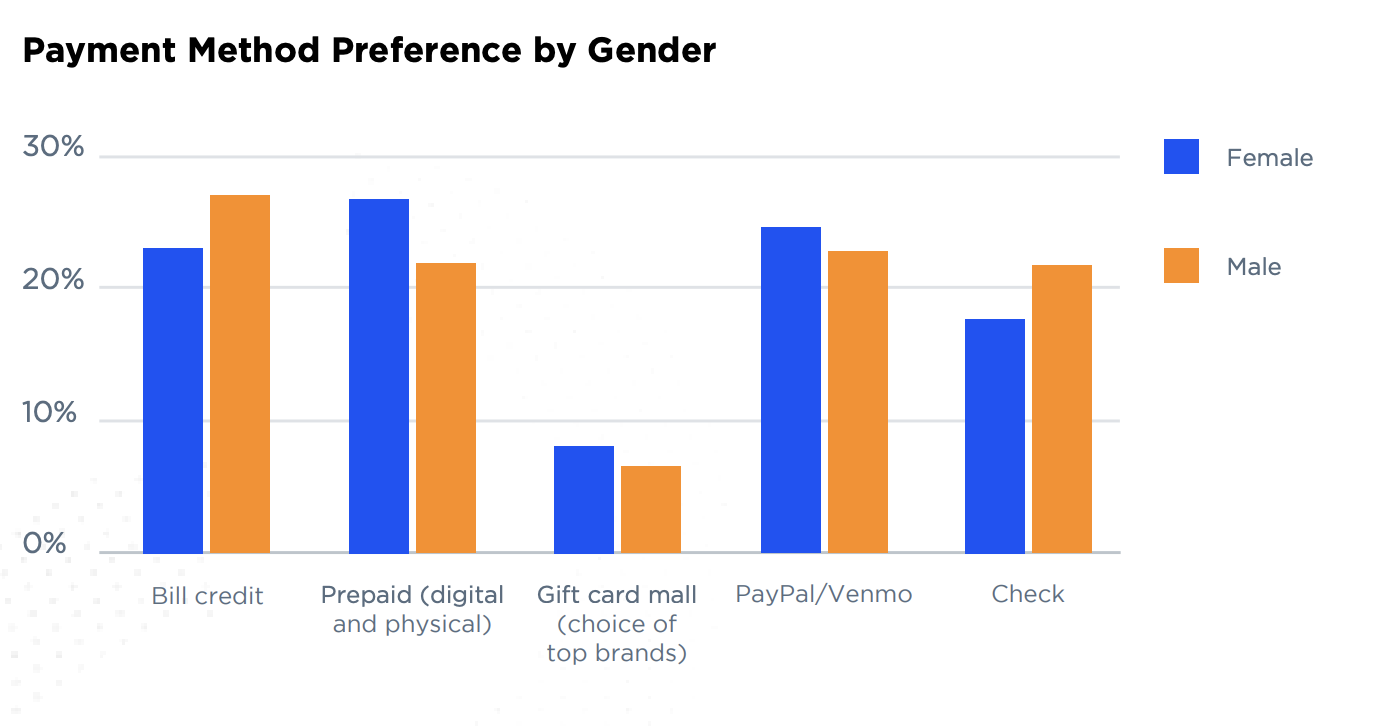
Demographics and personal preferences influence desires for payout methods. To consistently satisfy customers, utilities must offer diverse options to meet these varied and often shifting needs. This report will highlight the impact that gender, generation, and income have on preference—and how there is no “one size fits all.”
2. Financial Inclusion
Financial inclusion is being redefined. 66.2% of consumers feel they live paycheck to paycheck1 , which means utility disbursements can represent a significant financial event for the majority of consumers. We discuss how financial inclusion stretches way beyond LMI and utility payouts can make—or break—the bank.
3. Speed and Efficiency
Since utility payments can have a material financial impact, a smooth process and fast delivery are important. Speed also helps customers link the reward to the benefit that spawned it—thus associating the utility with financial benefit. Our research shows this is one of the most important features of a disbursement program.
4. Visibility and Communication
Transparency in payment processes increases participation and trust. Through every step of the process, customers should know from whom the payment comes and why they are receiving it. Branding the entire experience reinforces the program and associates the utility with a positive experience.
5. Satisfaction and Engagement
Payments are powerful tools. Don’t squander them. Handled properly, they can directly improve customer satisfaction and engagement. In addition to providing data on customer needs and behaviors, this report will also provide actionable recommendations to help utility executives use their payment practices as opportunities to polish the brand, as well as increase customer engagement and satisfaction.