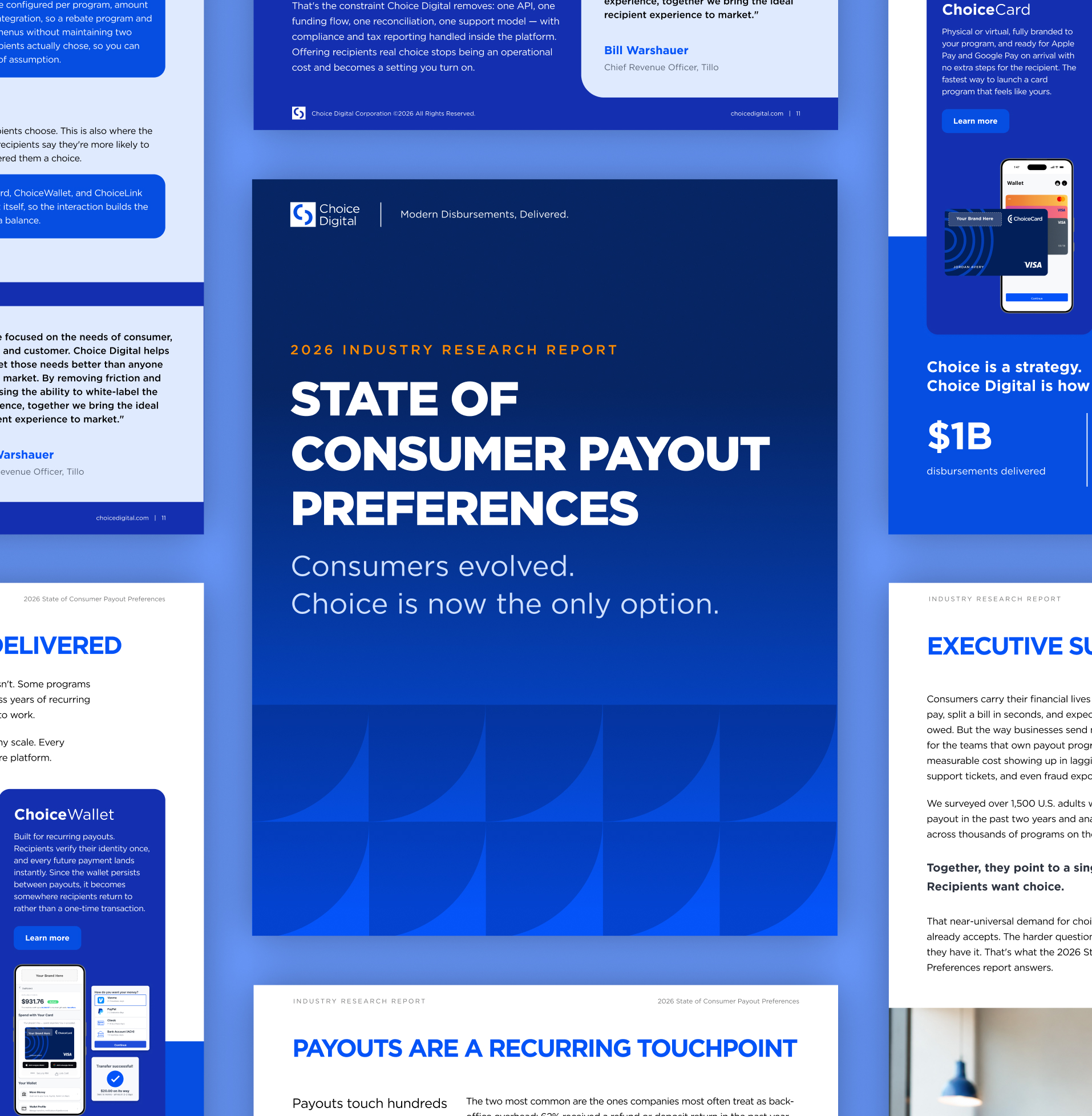
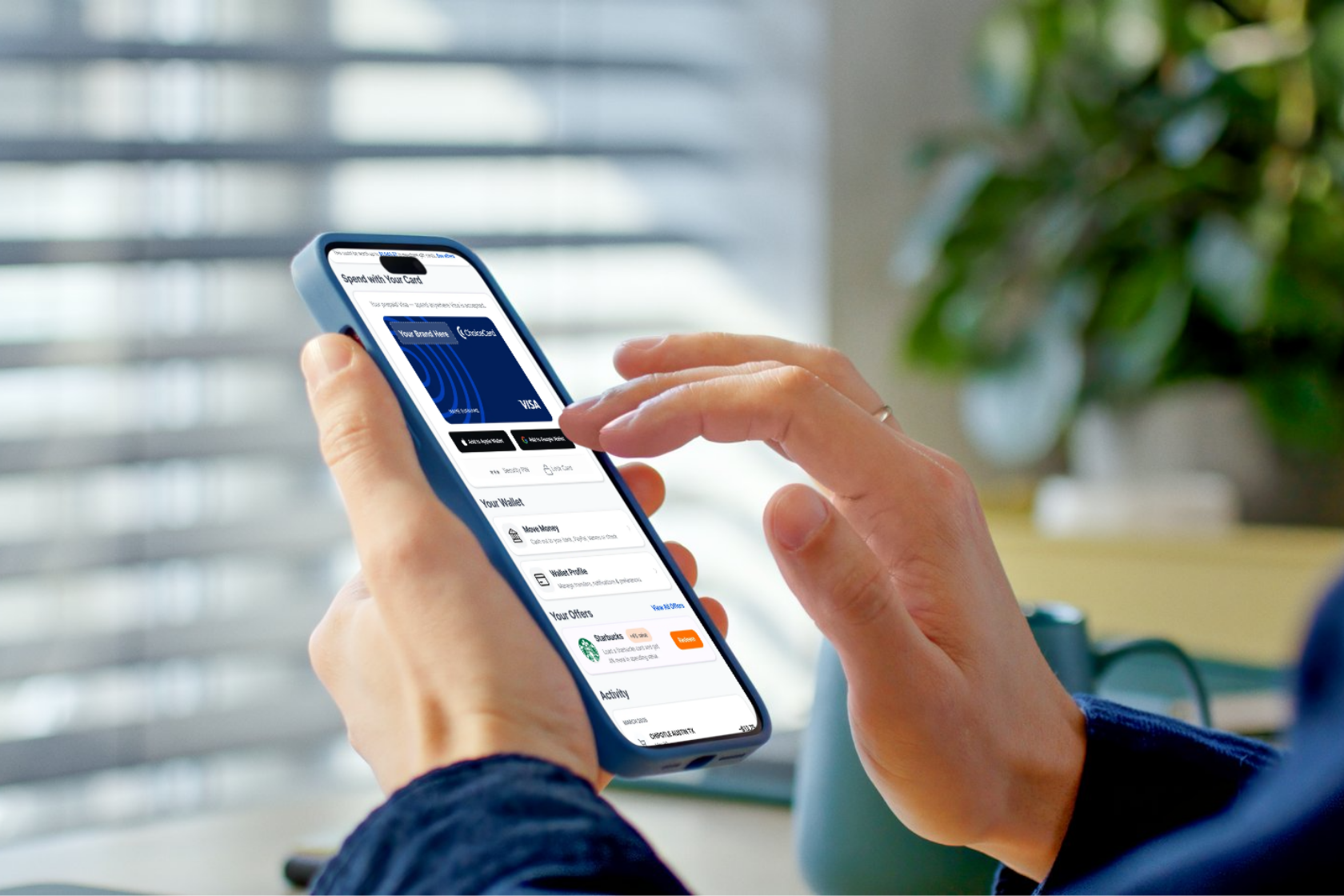
If you run an incentive, rebate, or rewards program, you already know a customer incentive payment solution is only as good as the recipient experience it delivers. You can design the perfect offer, target it perfectly, and fund it generously, and it still hinges on the reward itself. The modality, the speed, the personalization. That is the make-or-break moment. The payout is where intent becomes outcome.
Blog ·
Choice Everywhere, Except the Payout
By: Theresa McEndree, Chief Growth Officer at Choice Digital

The Make-or-Break Moment
Choice Everywhere, Until You Get Paid
Here is the uncomfortable question. Your recipients live in a world of total choice, until your program pays them. Then they get one option, decided by you. That single decision quietly shapes whether your program works, and whether your participants ever engage again.
The Most Splintered Preference Data I've Seen in 20 Years
I have spent more than two decades in payments and consumer research, and I have never seen preference data splinter the way this does. We surveyed more than 1,500 people, and the result was not a winning payment type. It was true fragmentation of preference. No method commands a majority. The right one shifts by the type of payment.
The single strongest, most consistent signal in the entire dataset is not a method at all. It is the desire to choose. Our 2026 State of Consumer Payout Preferences report states that 94% of recipients want choice in payout methods when receiving funds — for 79% of them, it matters a lot. When data splinters like this, it is telling you something simple. There is no safe default. The only thing that serves everyone is letting them decide.
Choice Is a Buying Signal
This shows up in behavior, which is what should get every program manager's attention. 72% of people say they are more likely to choose a company that offers their preferred way to get paid. Read that with your program in mind. The payout experience is not a downstream detail. It influences whether people engage with you at all. A single forced option is not just inconvenient for some recipients. It is misaligned with how almost all of them feel.
What One-Size-Fits-All Costs You
A forced payout method quietly drains value in three places:
Lost redemption. An incentive only works if it is received and used. When the payout does not fit how someone wants to be paid, redemption drops, and unredeemed budget is unrealized program value.
Support load you did not plan for. "Where's my payment?" "I can't use this card." "Can I get it another way?" Every mismatch and every delay becomes a ticket, and support volume scales with friction, not with program size.
Trust you cannot get back. 33% of people say being given no choice in how they are paid erodes their trust in a company, and 52% say the same about long delays. Speed compounds it. 72% rate how fast they are paid as very or extremely important, and nearly half (47%) say a two-week wait on a $250 payment would cause real financial strain.
Choice Is a Lever, Not a Cost
Now flip it. Add a digital wallet for incentives alongside prepaid cards and gift cards, and when people choose how they are paid, redemption climbs, support volume falls, and the payout becomes a reason people think well of your program instead of a reason they call you. That is the difference between a program that spends a brand moment and one that earns it.
Two things make choice actually work, and they are easy to forget: delivery and transparency. Offering five ways to get paid means nothing if some are slow or unreliable, or if the recipient cannot see where their money is. Real choice means every option lands reliably and fast, and both the recipient and your team can see it happen from start to finish. That is also where compliance lives. People get paid the way they want, with the controls and audit trail your program requires built in rather than bolted on.
Treat the Payout Like It's Part of the Program
Stop treating the payout as the last line item. Start treating it as the part of the program your recipients actually feel. It is the highest-leverage experience you are currently leaving on autopilot.
The full research on what recipients want when they get paid, and what the choice gap is costing programs like yours, is here: 2026 State of Consumer Payout Preferences.
Want to see what choice does to redemption and support volume? Schedule a demo.